
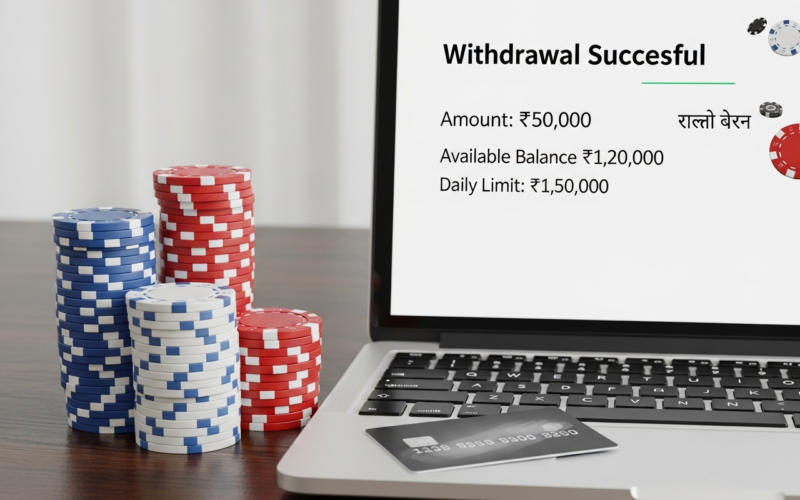
When Indian players win at online casinos, they often face a confusing maze of withdrawal restrictions. The daily withdrawal limit on your debit card is only one piece of the puzzle. Casino payout thresholds, processing rules, and verification requirements all combine to determine how much you can actually cash out and when. Understanding the difference between what your bank allows and what the casino enforces is essential for managing expectations and avoiding frustration.
Your bank’s daily ATM withdrawal limit—often ₹20,000 to ₹1,00,000 depending on card tier—controls physical cash access but doesn’t directly dictate online casino payouts. Meanwhile, casinos set their own minimum withdrawal amounts, typically ranging from ₹500 to ₹2,000, regardless of your card’s capabilities. These two systems operate independently, creating a layered set of constraints that players must navigate to access their winnings smoothly.
How Indian Debit Card Withdrawals Interact With Casino Payouts
Many players assume that their bank’s daily withdrawal limit is the only restriction they’ll encounter when cashing out casino winnings. In reality, casino banking operates on a separate framework. When you request a payout to your debit card, you’re not withdrawing cash from an ATM—you’re receiving a credit to your linked bank account, subject to the casino’s own minimum and maximum payout policies.
Indian banks impose daily transaction caps to manage fraud risk and liquidity, while casinos enforce minimum withdrawal thresholds to control processing costs and administrative overhead. A basic RuPay or Visa debit card might permit ₹25,000 in daily ATM withdrawals, yet the casino may require a minimum payout of ₹1,000 and limit you to ₹50,000 per transaction. These rules don’t override each other—they stack, meaning both sets of limits apply simultaneously.
The practical effect is that even if your bank permits larger daily transactions, you cannot bypass the casino’s minimum cashout amount. Conversely, if your bank’s daily limit is lower than the casino’s maximum payout, your bank cap becomes the binding constraint. Understanding this interplay helps you plan withdrawals strategically, avoiding declined requests and unnecessary delays.
Bank Limits vs Casino Limits: Why They Are Not the Same
Bank-imposed limits govern how much money you can move in or out of your account within 24 hours, covering ATM withdrawals, point-of-sale purchases, and online transactions. Casino limits, by contrast, dictate the smallest and largest sums the operator will process per withdrawal request. These two systems serve different purposes and rarely align perfectly.
| Limit type | Who sets it | What it controls | Typical effect |
|---|---|---|---|
| Daily ATM withdrawal cap | Your bank or card issuer | Maximum cash you can withdraw from ATMs in 24 hours | Does not apply to casino payouts; only physical cash access |
| Daily online transaction limit | Your bank or card issuer | Total value of online purchases and deposits per day | May cap your ability to deposit but rarely affects withdrawal receipts |
| Casino minimum withdrawal | The casino operator | Smallest amount you can request as a payout | Prevents small cashouts; you must meet this threshold or wait |
| Casino maximum withdrawal | The casino operator | Largest single payout permitted per transaction or day | Forces large wins to be withdrawn in multiple installments |
When both limits come into play, the more restrictive rule always wins. If your bank allows ₹1,00,000 daily but the casino caps payouts at ₹50,000 per transaction, you’ll need two separate withdrawal requests over two days to access the full amount. Conversely, if the casino permits ₹2,00,000 but your bank’s daily online limit is ₹75,000, your bank will decline any incoming credit above that threshold until the next reset.
What Players Usually Mean by Minimum Withdrawal Limits
When Indian players search for “minimum withdrawal limits,” they’re typically asking several related questions at once. Clarifying these upfront saves time and helps you focus on the constraints that actually affect your cashout strategy.
- Smallest payout amount: The minimum sum the casino will process—usually ₹500 to ₹2,000—below which you cannot request a withdrawal at all.
- Card compatibility: Whether the casino accepts RuPay, Visa, or Mastercard debit cards for payouts, and any associated restrictions on card types or issuers.
- Cashout method flexibility: Which withdrawal options have lower minimums or faster processing, such as e-wallets versus direct bank transfers.
- Bonus clearing requirements: How wagering or playthrough rules affect the actual amount available for withdrawal, even if your balance appears larger.
- Verification thresholds: Whether completing KYC unlocks higher or lower minimum payout amounts, or bypasses certain restrictions entirely.
Indian Bank Debit Card Withdrawal Limits by Card Type
Indian banks segment debit cards into tiers—basic, silver, gold, platinum—each with distinct daily transaction limits. These caps reflect the bank’s assessment of fraud risk and customer profile. Understanding where your card sits in this hierarchy helps you anticipate potential bottlenecks when cashing out casino winnings.
Basic RuPay and Visa cards issued by public-sector banks typically allow ₹20,000 to ₹25,000 in daily ATM withdrawals and ₹50,000 to ₹1,00,000 for online transactions. Premium cards from private banks can extend these limits to ₹1,00,000 or more per day for both ATM and online use. International transaction limits are often higher, especially for cards marketed to travelers, though currency conversion fees may apply.
| Bank/card type | Daily withdrawal limit | Notes on card tier | Source angle |
|---|---|---|---|
| SBI Classic Debit Card (RuPay/Visa) | ₹20,000 (ATM) / ₹50,000 (online) | Entry-level; widely held by retail customers | Bank’s official limit schedule |
| HDFC Bank Platinum Debit Card | ₹50,000 (ATM) / ₹1,50,000 (online) | Mid-tier; higher limits for frequent transactors | Cardholder agreement terms |
| ICICI Bank Coral Contactless Debit Card | ₹1,00,000 (ATM) / ₹2,00,000 (online) | Premium; designed for high-value customers | Published card features |
| Axis Bank Burgundy Debit Card | ₹1,00,000 (ATM) / ₹5,00,000 (online) | Elite tier; unlimited international transactions | Premium banking brochure |
| Kotak Mahindra 811 Virtual Debit Card | ₹25,000 (online only) | Digital-first; no ATM access | App-based account documentation |
It’s important to note that these limits are subject to change and may be customized at the account level. Some banks allow customers to request temporary limit increases via mobile banking apps or customer service, useful if you’re expecting a large casino payout. Always verify your current limits through net banking or your bank’s official channels before initiating a withdrawal request.
Typical Daily Cash Limits on Popular Indian Debit Cards
Domestic ATM withdrawals for basic cards generally fall between ₹20,000 and ₹40,000 per day. Silver and gold variants increase this range to ₹50,000–₹75,000, while platinum and signature cards can reach ₹1,00,000 or higher. These figures apply to cash withdrawals only; point-of-sale and online transaction limits are usually separate and often more generous.
For international use, many Indian banks set a combined weekly or monthly cap rather than a daily limit. A typical mid-tier card might allow $1,000 to $3,000 in international transactions per month, including ATM withdrawals and online purchases. Premium cards marketed to frequent travelers often extend this to $10,000 or remove daily caps altogether, though monthly ceilings still apply.
When receiving casino payouts, these ATM limits are irrelevant because the funds arrive as a credit to your account, not a cash withdrawal. However, your bank’s daily online transaction limit—the ceiling for digital debits and credits—does matter. If your card tier caps online credits at ₹1,00,000 per day and the casino approves a ₹2,00,000 payout, your bank may split the incoming transfer over two days or decline the excess, depending on their policies.
Casino Minimum Withdrawal Rules That Matter Most
Online casinos enforce minimum withdrawal amounts to manage transaction costs and operational efficiency. Processing a ₹100 payout costs the casino nearly as much as processing ₹10,000, so operators set thresholds—usually ₹500 to ₹2,000—to discourage frequent small cashouts. These minimums vary by payment method, with e-wallets often permitting lower thresholds than bank transfers or card payouts.
Bonus-related restrictions layer additional complexity. If you claim a deposit bonus, wagering requirements typically lock your funds until you’ve played through a specified multiple of the bonus amount. Even if your account balance exceeds the casino’s minimum withdrawal, you cannot cash out until the playthrough is complete. Verification requirements add another checkpoint: most casinos require KYC documents before approving any withdrawal, regardless of size.
- Check the casino’s published minimum: Review the cashier or withdrawal page for the stated minimum payout amount, which may differ by payment method.
- Verify your bonus status: Confirm that all wagering requirements are satisfied and that your balance is fully withdrawable, not locked to pending bonuses.
- Complete KYC if required: Upload identity, address, and payment method proofs to avoid delays or automatic withdrawal rejections.
- Select the appropriate method: If your balance is just below the card minimum, consider switching to an e-wallet or bank transfer with a lower threshold.
- Account for fees: Factor in any casino-imposed withdrawal fees, which can erode the value of small payouts and make waiting for a larger balance more economical.
Common Minimum Cashout Thresholds and Exceptions
Different payment methods carry distinct minimum withdrawal requirements. Understanding these nuances helps you choose the most flexible option for your situation and avoid getting stuck with funds trapped below the payout threshold.
| Rule | What it means | Possible exception | Player impact |
|---|---|---|---|
| Debit card minimum ₹1,000 | You cannot withdraw less than ₹1,000 to a card | VIP players or special promotions may have lowered thresholds | Small balances remain locked until you accumulate enough |
| E-wallet minimum ₹500 | E-wallets often allow smaller payouts than cards or bank transfers | Some wallets may have promotional periods with no minimum | Provides flexibility for cashing out modest winnings quickly |
| Bank transfer minimum ₹2,000 | Direct bank deposits typically have higher minimums due to processing costs | Rarely waived; banks charge flat fees that make small transfers uneconomical | Best reserved for larger payouts to minimize fee impact |
| No minimum for crypto | Cryptocurrency withdrawals may have no fiat-equivalent minimum | Network fees can exceed the value of very small transactions | Useful for tiny balances but watch gas fees on Ethereum-based tokens |
Some casinos offer “cashback” or “loyalty point redemption” features that let you convert small balances below the minimum withdrawal into bonus credits or free spins, effectively unlocking trapped funds. Always read the terms for such programs, as they may require additional wagering or impose their own eligibility criteria.
How Wagering Requirements and KYC Affect Payout Access
Wagering requirements—sometimes called playthrough or rollover—mandate that you bet a certain multiple of your bonus amount before any winnings become withdrawable. A common structure is 30x or 40x the bonus, meaning a ₹1,000 bonus requires ₹30,000 to ₹40,000 in total wagers. Until you complete this, your entire balance may be classified as “bonus funds,” ineligible for withdrawal regardless of how much you’ve won.
KYC verification is a separate but equally important barrier. Most reputable casinos require you to upload government-issued ID, proof of address, and sometimes a photo of your debit card (with middle digits obscured) before processing any payout. Incomplete or rejected KYC documents will freeze your withdrawal request indefinitely, even if you meet all other criteria.
The combination of these two factors creates a common frustration: you see a healthy balance in your account, exceed the casino’s minimum withdrawal amount, but still cannot cash out because wagering is incomplete or documents are pending review. Always prioritize completing KYC immediately after registration, and carefully track your bonus playthrough progress in the casino’s account dashboard to avoid surprises when you’re ready to withdraw.
Best Structure for Explaining Limits to Indian Players
When addressing Indian players’ questions about withdrawal limits, clarity and specificity are paramount. Start by answering the core question—”What’s the minimum I can withdraw?”—then layer in the factors that modify that baseline. A well-structured explanation separates bank constraints from casino policies, avoiding the common pitfall of conflating ATM cash limits with online payout thresholds.
Present bank limits first, since these are fixed and verifiable through official channels. Then introduce casino minimums and bonus-related restrictions, which vary by operator and promotion. Finally, address edge cases like KYC delays, payment method differences, and fee structures. This progression mirrors the player’s decision-making process: check what your bank allows, see what the casino requires, and plan around any special conditions.
| Section goal | What to cover | Why it matters | Suggested example |
|---|---|---|---|
| Define baseline limits | Bank card tier, daily caps, and ATM vs online distinctions | Sets realistic expectations before introducing casino variables | “Your SBI Classic card allows ₹50,000 online per day” |
| Explain casino minimums | Operator-specific thresholds and method-based differences | Highlights restrictions independent of bank policies | “Casino X requires ₹1,000 minimum for card payouts” |
| Address bonus constraints | Wagering requirements, locked funds, and clearing criteria | Prevents confusion when balances appear withdrawable but aren’t | “You’ve wagered ₹15,000 of the required ₹30,000” |
| Cover verification steps | KYC documents, approval timelines, and common rejections | Reduces delays by prompting early document submission | “Upload Aadhaar and utility bill within 24 hours” |
Using concrete examples rooted in Indian banking and popular casinos makes abstract limits tangible. Instead of saying “limits vary,” specify “HDFC Platinum allows ₹1,50,000 online daily, while most casinos cap single withdrawals at ₹50,000.” This approach builds trust and helps readers quickly identify which constraints apply to their specific situation.
The Fastest Way to Help Readers Find Their Real Limit
To cut through the confusion and pinpoint the actual withdrawal amount you can access, follow this streamlined checklist:
- Identify your card tier: Check your bank’s website or mobile app to confirm whether you hold a basic, silver, gold, or platinum debit card, and note the associated daily online transaction limit.
- Review the casino’s payout policy: Visit the cashier section or terms and conditions to find the minimum and maximum withdrawal amounts for your chosen payment method.
- Verify KYC completion: Ensure your account is fully verified with approved identity and address documents; unverified accounts often face additional restrictions or outright payout blocks.
- Calculate available balance: Subtract any locked bonus funds and pending wagering requirements from your total balance to determine the actual withdrawable amount.
Fees, Processing Times, and Transaction Friction
Beyond minimum and maximum limits, withdrawal costs and processing delays significantly affect the net value and speed of your payout. Indian players face fees from multiple sources—banks, card networks, and casinos—each triggered under different conditions. Small withdrawals are disproportionately impacted, as a flat ₹100 fee on a ₹500 payout erodes 20% of your winnings.
Processing times vary widely by method. E-wallets often credit within hours, while bank transfers and card payouts can take 3–7 business days. Casinos typically impose an internal review period of 24–72 hours before releasing funds, adding to the total wait. Combining a slow method with a small payout creates maximum friction: you wait longer and pay more in percentage terms.
Where Withdrawal Fees Usually Appear
Fees can be imposed at multiple stages of the withdrawal process, making it essential to understand who charges what and when.
| Fee source | When it applies | Typical trigger | Player effect |
|---|---|---|---|
| Casino withdrawal fee | Charged by the casino operator per payout request | Often waived for first withdrawal each month; applied to subsequent requests | Flat ₹100–₹300 reduces net payout; consolidate withdrawals to minimize |
| Bank processing fee | Applied by your bank when receiving international or third-party credits | Typically for cross-border transactions or SWIFT transfers | ₹50–₹500 depending on bank; check with your branch for exact policy |
| Currency conversion markup | When casino balances are in USD, EUR, or other foreign currencies | Card networks apply 3–4% markup over interbank exchange rates | Hidden cost that reduces effective payout; favor INR-denominated casinos |
| Payment gateway charge | Imposed by third-party processors facilitating the transaction | Common with e-wallets or aggregators; varies by provider | Usually 1–2% of transaction value; compare providers to find lowest rates |
To minimize total fees, batch your withdrawals into larger, less frequent requests. If your casino offers one free withdrawal per month, reserve it for your biggest payout. For smaller amounts, consider accumulating balance until you exceed the free threshold or switch to a low-fee e-wallet.
Processing Speed vs Minimum Payout Size
Faster withdrawal methods often have lower minimum thresholds, creating a trade-off between speed and the amount you can access. E-wallets like Paytm or PhonePe typically process payouts within 6–24 hours and may allow withdrawals as low as ₹500, making them ideal for quick access to modest winnings. Bank transfers and debit card credits take longer—3–7 business days—but accommodate larger sums without additional fees once you exceed the minimum.
Cryptocurrency withdrawals offer near-instant settlement for any amount, but require familiarity with wallets and exchanges. For players prioritizing speed over convenience, crypto can bypass both bank and casino delays, though network fees on congested blockchains may exceed the value of very small withdrawals.
If you’re withdrawing a large jackpot, speed becomes less critical than security and fee efficiency. In such cases, a direct bank transfer—despite its multi-day processing—ensures the funds arrive in your account with minimal risk of reversal or third-party holds. For everyday cashouts of a few thousand rupees, an e-wallet’s speed advantage outweighs the slight delay of traditional banking.
Which Withdrawal Methods Work Better Than Debit Cards
Debit cards are familiar and widely held, but they’re rarely the optimal withdrawal method for online casino winnings. E-wallets, bank transfers, and cryptocurrency alternatives often provide lower minimums, faster processing, or reduced fees. Evaluating these options based on your priorities—speed, cost, or convenience—helps you choose the best fit.
The following methods are ranked by overall utility for Indian players, balancing accessibility, processing time, and cost-effectiveness:
- E-wallets (Paytm, PhonePe, Google Pay): Fastest processing (6–24 hours), lowest minimums (₹500–₹1,000), widely accepted across casinos, and minimal fees for domestic transactions.
- UPI bank transfer: Direct deposit to your bank account, moderate speed (1–3 days), no intermediary fees, and high acceptance among India-facing casinos.
- Cryptocurrency (Bitcoin, Ethereum, USDT): Near-instant settlement, no minimum (subject to network fees), global acceptance, but requires technical knowledge and wallet setup.
- Direct bank transfer (NEFT/RTGS): Suitable for large amounts, secure and traceable, but slower (3–7 days) and may incur bank charges for international transfers.
- Debit card payout: Familiar and convenient, but higher minimums (₹1,000–₹2,000), slower processing (5–7 days), and subject to both bank and casino limits.
Comparison of Debit Cards, Bank Transfers, and E-Wallets
A side-by-side comparison highlights the trade-offs between speed, cost, and minimum withdrawal requirements across the most popular methods.
| Method | Typical minimum | Speed | Best use case |
|---|---|---|---|
| Debit card (Visa/Mastercard/RuPay) | ₹1,000–₹2,000 | 5–7 business days | Players who prefer direct-to-card credits and don’t need immediate access |
| E-wallet (Paytm, PhonePe, Skrill) | ₹500–₹1,000 | 6–24 hours | Quick access to winnings for everyday spending or reinvestment |
| Bank transfer (UPI/IMPS/NEFT) | ₹1,000–₹2,500 | 1–3 business days | Larger payouts where traceability and security are priorities |
| Cryptocurrency (Bitcoin, USDT) | No fixed minimum (network fees apply) | Minutes to 1 hour | Tech-savvy players seeking maximum speed and privacy |
| Prepaid card/voucher | ₹500–₹1,500 | 1–2 business days | Players without bank accounts or those preferring anonymity |
For most Indian players, e-wallets strike the best balance of speed, low minimums, and ease of use. If you already use Paytm or PhonePe for daily transactions, linking it to your casino account requires minimal setup and lets you access winnings almost instantly. Bank transfers are preferable for amounts exceeding ₹25,000, where security and formal records justify the longer wait.
How to Check Your Actual Withdrawal Limit Before You Cash Out
Uncertainty about your real withdrawal limit wastes time and risks declined transactions. A systematic pre-check ensures you know exactly how much you can withdraw and which constraints apply before you submit a payout request.
Follow these steps to verify all relevant limits and avoid surprises:
- Log into your bank’s net banking or mobile app: Navigate to the debit card management section and confirm your daily online transaction limit and current card tier.
- Review the casino’s withdrawal page: Check the cashier or banking section for stated minimum and maximum payout amounts, and note any method-specific differences.
- Inspect your bonus and wagering status: Open your account dashboard or bonus history to see if any funds are locked pending playthrough completion.
- Verify KYC approval: Ensure your identity and address documents show as “approved” or “verified” in the account settings; pending or rejected documents block withdrawals.
- Calculate net payout after fees: If the casino or payment provider charges withdrawal fees, subtract these from your intended amount to confirm the final sum meets the minimum.
Step-by-Step Limit Check for Indian Players
Breaking the verification process into discrete actions makes it easier to complete quickly and accurately:
- Open your bank’s official app: Select “Cards” or “Debit Card Services” to view your current daily limits for online and ATM transactions.
- Screenshot or note your limits: Record the exact figures (e.g., “₹50,000 online, ₹25,000 ATM”) for easy reference during the casino withdrawal process.
- Visit the casino’s cashier page: Click “Withdraw” or “Cashout” and review the displayed minimum and maximum for your chosen payment method.
- Check your account balance breakdown: Distinguish between “real money,” “bonus funds,” and “withdrawable balance” to avoid requesting locked amounts.
- Consult customer support if unclear: If the casino’s published limits conflict with your bank’s caps, or if bonus terms are ambiguous, contact support before proceeding.
When to Contact Support Instead of Guessing
If your withdrawal request is rejected without a clear explanation, or if the casino’s stated limits don’t align with your experience, reach out to customer support immediately. Common scenarios that warrant support contact include repeated declines despite meeting published minimums, discrepancies between bonus terms and actual playthrough tracking, or KYC documents marked “rejected” without specific feedback.
Support teams can often expedite manual reviews, clarify bonus status, or issue temporary limit increases for verified players. Waiting or re-attempting withdrawals blindly wastes time and risks locking your account if the system flags repeated failed requests as suspicious activity.
Editorial Angle: What Makes This Topic Stand Out in Search
Most casino banking guides treat withdrawal limits generically, failing to address the unique interplay of Indian banking regulations, card tiers, and casino policies. This article fills that gap by providing localized advice rooted in real Indian debit card examples and casino practices common to the market. By separating bank-imposed caps from casino minimums and explaining how they interact, readers gain a practical framework for decision-making rather than vague generalities.
Competitors rarely dive into the specifics of RuPay versus Visa daily limits, or how KYC verification affects payout thresholds for Indian players. Generic content also overlooks the fees and processing delays that disproportionately affect smaller withdrawals, leaving players unprepared for the true cost of cashing out modest balances. This guide addresses those gaps directly, offering actionable checklists and comparison tables that empower readers to optimize their withdrawal strategy.
Unique Value Proposition for the Final Article
This content stands apart through several key differentiators that directly serve Indian casino players:
- India-specific card examples: Detailed breakdowns of SBI, HDFC, ICICI, and other major banks’ debit card limits, rather than generic international references.
- Dual-limit framework: Clear separation of bank caps and casino minimums, with explanations of how they combine to form the true withdrawal constraint.
- Practical decision tools: Checklists, step-by-step verification guides, and comparison tables that readers can use immediately to assess their own limits.
- Fee and speed transparency: Honest discussion of withdrawal costs and processing delays, helping players choose methods that balance speed, cost, and convenience.